


The digital gold business is becoming an increasingly attractive opportunity in the global financial industry. As technology continues to evolve, consumers and investors can now buy, sell, and manage gold through digital platforms without having to store physical gold themselves. This transformation has created new opportunities for entrepreneurs, financial technology companies, digital marketers, and investment service providers.
In 2026, the combination of digital financial services, growing interest in gold as a store of value, and the expansion of online investment platforms is creating new business opportunities. However, success in this market requires more than simply following gold price movements. Businesses must also understand consumer behavior, digital marketing strategies, technological developments, regulatory requirements, and investment risks.
This article explores digital gold business strategies in 2026, global investment trends, market opportunities, effective marketing approaches, and important factors to consider before entering the industry.
Understanding the Digital Gold Business
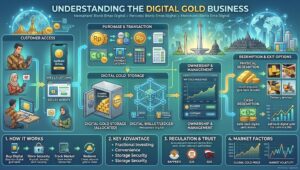
A digital gold business is a business model that allows customers to access gold-related products or services through digital platforms. Depending on the business model, customers may be able to purchase gold electronically, monitor gold prices, manage gold investments, or access educational information about the precious metals market.
Digital gold businesses can operate through mobile applications, websites, e-commerce platforms, financial technology services, or online marketing channels.
Some common digital gold business models include:
- Digital gold investment platforms: Services that allow customers to buy and sell gold electronically, subject to the platform’s terms and applicable regulations.
- Gold price information websites: Websites that provide gold price updates, market analysis, and investment education.
- Gold affiliate marketing: Businesses that earn commissions by referring customers to gold-related products or services.
- Digital marketing services for gold businesses: Agencies that help gold retailers, dealers, and investment platforms attract customers online.
- Gold investment education: Online courses, newsletters, and educational content that explain gold markets and investment strategies.
- Gold-backed digital assets: Digital tokens designed to represent ownership or claims associated with physical gold, depending on the issuer’s structure and legal arrangements.
Each model has different capital requirements, revenue potential, operating costs, and regulatory obligations. Choosing the right model is therefore an important first step.
Digital Gold Investment Trends in 2026
1. Growing Interest in Digital Investment Platforms
Digital financial services have made investment products more accessible to consumers. Investors can increasingly compare prices, monitor market movements, and manage financial assets through their smartphones.
This trend creates opportunities for businesses that offer convenient user experiences, transparent pricing, educational resources, and reliable customer support.
For entrepreneurs, developing a digital gold business does not necessarily require launching a full investment platform. A gold-focused information website, educational channel, or digital marketing service can also serve a growing audience.
2. Gold as a Diversification Asset
Gold continues to attract attention from investors seeking to diversify their portfolios. Its role in an investment strategy depends on market conditions, individual objectives, and risk tolerance.
During periods of economic uncertainty, geopolitical tension, inflation concerns, or currency volatility, some investors increase their interest in gold. However, gold prices can also decline, and gold does not guarantee profits.
Businesses that provide balanced market analysis and explain both the potential benefits and risks of gold may be better positioned to build long-term customer trust.
3. Integration of Technology and Financial Services
Financial technology is changing how consumers interact with investment products. Mobile applications, automated notifications, digital payment systems, and analytical tools can make gold-related services easier to access.
Businesses can use these technologies to improve customer experiences, simplify transactions, and provide relevant market information.
Nevertheless, technology alone does not guarantee success. Security, transparent fees, reliable operations, and clear information about the underlying gold or investment product remain essential.
4. Tokenized Gold and Blockchain Technology
Tokenized gold is another area attracting attention in digital finance. Depending on its structure, a token may represent a claim on physical gold or another contractual right associated with gold.
Blockchain technology can support transaction records and digital asset transfers. However, tokenized gold products differ significantly in their legal structure, redemption arrangements, custody practices, and issuer risks.
Before offering or investing in these products, businesses and consumers should carefully review the issuer’s documentation, the rights attached to each token, redemption conditions, and applicable regulations.
Global Market Opportunities for Digital Gold Businesses

The global digital gold market offers opportunities across several business segments. The most suitable opportunity depends on available capital, technical expertise, marketing capabilities, and local regulatory requirements.
1. Building a Gold Information Website
A website focused on gold prices, market trends, investment education, and business opportunities can attract visitors who want to understand the precious metals market.
Potential content categories include:
- Daily and weekly gold price analysis
- Gold investment strategies for beginners
- Comparisons between physical and digital gold
- Global gold market developments
- Gold business opportunities and industry news
- Guides to evaluating gold investment platforms
Search engine optimization (SEO) can help this type of website reach people who are actively looking for gold-related information.
Revenue may come from advertising, sponsorships, affiliate partnerships, subscriptions, or premium research content. Actual earnings depend on traffic quality, audience location, advertiser demand, and the website’s monetization strategy.
2. Gold Affiliate Marketing
Affiliate marketing allows businesses and content creators to earn commissions by referring customers to participating companies.
For example, a website or social media account could publish educational content about gold investment products and direct interested readers to a suitable provider through a disclosed affiliate link.
An effective affiliate strategy should prioritize relevant audiences, accurate information, transparent disclosures, and trustworthy partners.
Businesses should avoid promising guaranteed returns or presenting risky financial products as risk-free opportunities.
3. Digital Marketing Services for Gold Companies
Gold retailers, jewelry businesses, dealers, and investment service providers may need support with their online presence.
Digital marketing agencies can offer services such as:
- Search engine optimization
- Social media management
- Website development
- Paid advertising campaigns
- Educational content production
- Lead generation
- Conversion rate optimization
This model can be attractive to entrepreneurs who have digital marketing skills but do not want to hold gold inventory or operate an investment platform.
4. Developing Digital Gold Technology
Entrepreneurs with technical expertise may explore software solutions for gold-related businesses. Examples include inventory management systems, price-monitoring dashboards, customer relationship management tools, and secure transaction interfaces.
Developing a platform that facilitates actual gold purchases or investments, however, can involve substantial security, custody, payment, and regulatory requirements.
A technology business should clearly define whether it provides software only or directly participates in regulated financial activities.
5. Gold Education and Premium Research
Educational content can help investors understand how gold markets work, what influences gold prices, and how different gold products operate.
Potential products include online courses, e-books, webinars, newsletters, and premium market reports.
To build credibility, educational businesses should distinguish factual market information from opinions and forecasts. Predictions should not be presented as guaranteed outcomes.
Strategies for Building a Successful Digital Gold Business in 2026

1. Choose a Clear Business Model
Before launching a business, determine the main product or service you intend to offer.
For example, a beginner with limited capital might start with a gold information website or an educational social media channel. An experienced digital marketer could provide SEO and advertising services to gold retailers. A company with sufficient technical and financial resources might explore a more complex technology platform.
A clear business model helps define the target audience, initial costs, revenue sources, and operational priorities.
2. Build Trust Through Transparency
Trust is essential in financial services because customers are making decisions involving their money.
Businesses should provide clear information about pricing, fees, product risks, withdrawal conditions, ownership rights, and customer support.
If a service involves physical gold, customers should understand how the gold is stored, whether it is independently audited, and what rights they have to redeem or sell it.
If a service involves digital tokens, the issuer’s obligations and redemption mechanisms should be explained clearly.
Transparent communication can help businesses establish credibility and develop long-term customer relationships.
3. Use SEO to Reach Potential Customers
Search engine optimization can help digital gold businesses attract users who are actively researching gold investments or related services.
Relevant keyword themes include:
- Digital gold investment
- Digital gold business opportunities
- Global gold market trends in 2026
- Gold investment strategies
- Physical gold vs. digital gold
- Gold price analysis
- How to start a gold-related online business
Create useful articles that answer specific questions, explain financial concepts clearly, and provide appropriate sources.
A strong SEO strategy should also include fast website performance, mobile-friendly design, descriptive page titles, relevant internal links, and regular content updates.
Because financial topics can influence important personal decisions, content should prioritize accuracy, credible sourcing, and clear explanations of risk.
4. Develop a Strong Content Marketing Strategy
Content marketing can help businesses educate potential customers before asking them to purchase a product or service.
A practical content strategy could include:
- Daily gold market summaries
- Weekly educational articles
- Short videos explaining gold investment concepts
- Infographics comparing gold products
- Interviews with qualified industry professionals
- Email newsletters covering market developments
Content should be tailored to the intended audience. Beginners may need basic explanations, while experienced investors may prefer more detailed market analysis.
Avoid using sensational headlines that exaggerate potential profits or create unnecessary fear.
5. Understand the Target Audience
Different customer groups have different motivations for exploring gold-related products.
Some are interested in long-term wealth preservation, while others want to diversify their portfolios or learn about financial markets. Jewelry buyers may have entirely different needs from digital investment customers.
Businesses should research their audience’s knowledge, financial goals, concerns, and purchasing behavior.
This information can guide product development, website structure, advertising messages, and customer service.
6. Use Data to Improve Business Performance
Data analytics can help businesses identify which products, content, and marketing campaigns perform best.
Useful metrics include:
- Website traffic and search rankings
- Customer acquisition cost
- Conversion rate
- Customer retention rate
- Affiliate link performance
- Revenue per customer
- Customer service response time
Reviewing these metrics regularly allows businesses to identify weaknesses and allocate resources more efficiently.
However, marketing performance should be evaluated alongside customer satisfaction, compliance, and the long-term sustainability of the business.
Risks and Challenges in the Digital Gold Market

Although digital gold offers opportunities, it also involves risks that businesses and investors should understand.
1. Gold Price Volatility
Gold prices can rise or fall in response to interest rates, currency movements, investor sentiment, central bank activity, and geopolitical developments.
A business that depends on gold price movements may face financial losses if market conditions change unexpectedly.
Businesses should distinguish between earning revenue from providing services and earning profits from changes in gold prices.
2. Platform and Counterparty Risk
Customers using digital gold services may face risks associated with the platform, issuer, custodian, or other parties involved in the transaction.
Potential problems include operational failures, withdrawal delays, inaccurate records, insolvency, and unclear ownership rights.
Before using a platform, customers should investigate its legal status, operating history, fee structure, custody arrangements, and complaint-handling procedures.
3. Cybersecurity Threats
Digital financial services can be targets for phishing, account theft, data breaches, and unauthorized transactions.
Businesses should consider strong authentication, secure data handling, access controls, transaction monitoring, regular security assessments, and incident response procedures.
Customers should also protect their login credentials and avoid sharing verification codes with unknown parties.
4. Liquidity and Transaction Costs
Not every digital gold product can be sold or redeemed under the same conditions.
Differences in buying and selling prices, transaction fees, minimum redemption amounts, and withdrawal periods can affect the amount a customer ultimately receives.
Businesses should explain these conditions clearly before customers make transactions.
5. Regulatory Compliance
Digital gold businesses may be subject to different rules depending on their activities, product structures, and operating jurisdictions.
A website publishing general educational content may have different obligations from a business that holds customer funds, facilitates gold transactions, provides investment services, or issues digital assets.
In Indonesia, businesses should verify the relevant licensing and regulatory requirements with the appropriate authorities before launching their services. Regulatory responsibilities may differ between physical gold trading, digital gold products, and crypto-related activities.
Legal and Regulatory Considerations
Entrepreneurs planning to enter the Indonesian digital gold market should not assume that every platform or product is automatically authorized.
Before launching a business or investing through a platform, consider the following steps:
- Verify the business’s legal status. Check the relevant official authority and confirm that the company is authorized to conduct the activities it offers.
- Understand the product structure. Determine whether the service involves physical gold, a contractual claim, a digital token, or another type of financial product.
- Review customer rights. Understand ownership, custody, redemption, withdrawal, and dispute-resolution arrangements.
- Check advertising requirements. Ensure that marketing materials do not make misleading claims or promise guaranteed investment profits.
- Obtain professional advice when necessary. Consult qualified legal, tax, and compliance professionals before operating a business involving regulated financial activities.
The relevant rules may change over time, so businesses should consult current official guidance rather than rely solely on old articles or social media discussions.
How to Start a Digital Gold Business With a Limited Budget

Starting a digital gold business does not always require purchasing physical gold or developing a sophisticated financial application.
Here is a practical approach for entrepreneurs who want to test the market.
Step 1: Research the market.
Identify the audience you want to serve and study existing websites, service providers, and customer needs.
Step 2: Select a low-complexity business model.
Consider an educational website, a gold market newsletter, a content production service, or digital marketing for established gold businesses.
Step 3: Create a professional online presence.
Develop a clear website or social media profile that explains your services, provides useful information, and makes it easy for potential customers to contact you.
Step 4: Publish consistent, high-quality content.
Create articles, videos, and guides that answer real customer questions. Use credible sources and update information when market conditions change.
Step 5: Build partnerships.
Explore legitimate partnerships with gold retailers, relevant service providers, or established businesses. Disclose commercial relationships where required.
Step 6: Measure results.
Track traffic, customer inquiries, conversion rates, expenses, and revenue. Use the results to improve your strategy before expanding.
Step 7: Expand carefully.
Once the business demonstrates sustainable demand, consider investing in additional content, technology, staff, or new services.
This approach can help entrepreneurs test demand while limiting unnecessary initial expenses. However, the actual budget and potential returns will depend on the chosen business model.
The Future of Digital Gold Businesses
The future of digital gold businesses will likely be influenced by the continued development of financial technology, changing investment preferences, improved digital payment systems, and demand for convenient access to financial information.
Businesses that combine useful technology with transparent operations and strong customer education may be well positioned to compete.
At the same time, competition, cybersecurity threats, regulatory changes, and customer expectations will continue to challenge the industry.
Long-term success will depend on delivering genuine value rather than relying only on gold price speculation or short-term market excitement.
Conclusion
Digital gold business opportunities in 2026 extend beyond buying and selling gold through online platforms. Entrepreneurs can explore gold information websites, affiliate marketing, digital marketing services, investment education, and specialized technology solutions.
To succeed, businesses should choose an appropriate model, understand their target audience, implement effective SEO and content marketing strategies, protect customer information, and comply with relevant regulations.
Gold can play a role in investment diversification, but its price is not guaranteed to increase. Similarly, a digital gold business is not automatically profitable simply because interest in gold is growing.
The most sustainable strategy is to combine market research, responsible communication, transparent operations, and a long-term commitment to customer trust.
Frequently Asked Questions (FAQ)
1. What is a digital gold business?
A digital gold business provides gold-related products or services through online platforms. Examples include digital gold investment services, gold price websites, affiliate marketing, educational content, and software solutions for gold businesses.
2. Is a digital gold business profitable in 2026?
It can be profitable, but results depend on the business model, customer demand, operating costs, competition, and execution. No business model guarantees profits.
3. Can I start a digital gold business with limited capital?
Yes. Depending on applicable rules, entrepreneurs may begin with a gold information website, educational content, or digital marketing services without purchasing physical gold.
4. What are the main risks of digital gold investments?
Key risks include gold price fluctuations, platform or issuer failures, cybersecurity threats, liquidity limitations, transaction fees, and regulatory uncertainty.
5. How can SEO help a digital gold business?
SEO can help a website reach people searching for gold prices, investment education, market analysis, and digital gold services. Useful content, credible sources, mobile-friendly design, and regular updates can support long-term organic visibility.
6. Is digital gold the same as physical gold?
No. Physical gold generally involves direct possession or storage arrangements, while digital gold products may involve electronic records, contractual claims, or other structures. Ownership rights, custody, and redemption conditions depend on the specific product.
7. What should I check before using a digital gold platform?
Review the provider’s legal status, fees, custody arrangements, product terms, withdrawal and redemption conditions, security practices, and customer complaint procedures.